Choosing the right hot melt adhesive is only half the job. Even a good-quality EVA hot melt glue can produce weak bonding, excessive glue lines, or edge banding defects if the application temperature and machine settings are incorrect.
For details relevant to this topic, review hot melt adhesive range and EVA hot melt adhesive grades.
For furniture manufacturers using automatic edge banding machines, temperature affects adhesive viscosity, wetting, open time, and bonding performance. Machine speed, pressure roller settings, substrate temperature, and workshop conditions also play important roles.
So, what is the correct hot melt glue temperature for edge banding?
For many industrial EVA edge banding applications, operating temperatures fall within approximately 150–210°C, depending on the adhesive formulation and machine configuration. Some products require different temperatures for the glue tank and application roller.
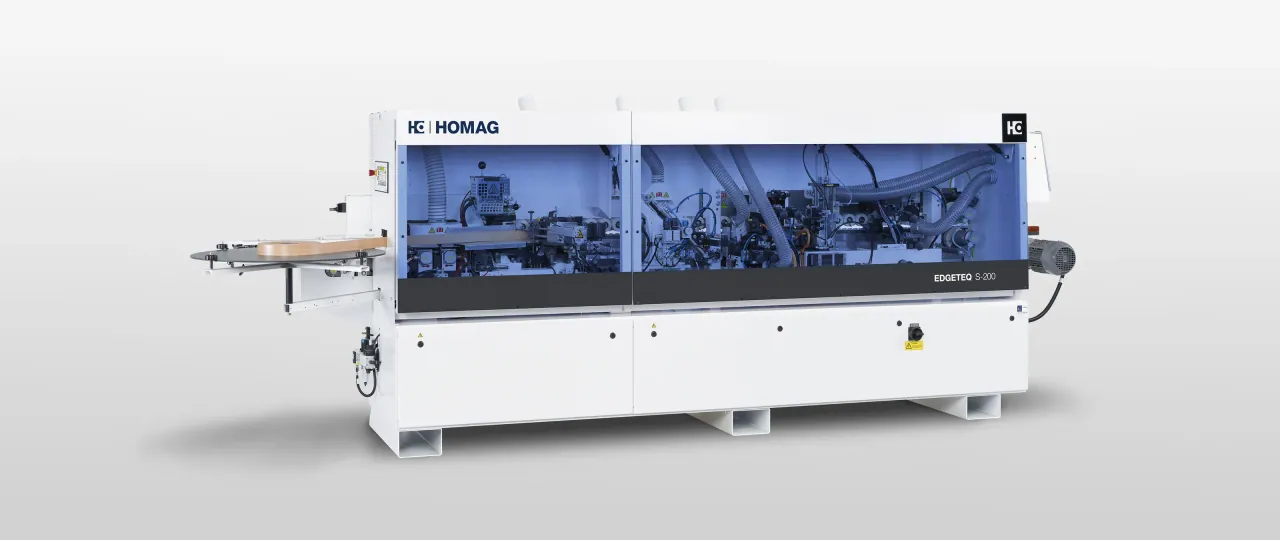
This guide explains how to select between medium-temperature and high-temperature EVA adhesives, adjust your machine parameters, and identify common bonding problems.
1. Understanding Hot Melt Glue Temperature for Edge Banding
Before adjusting your machine, distinguish between three temperature settings:
- Glue tank temperature: The temperature used to melt and maintain the adhesive in the glue pot.
- Application roller temperature: The temperature of the adhesive where it is transferred onto the panel edge or edge banding material.
- Substrate temperature: The temperature of the MDF, particleboard, plywood, or other material being bonded.
These temperatures do not necessarily have to be identical. In some machines, the adhesive passes through a heating system before reaching the application roller, so the roller temperature may differ from the glue tank temperature.
The temperature displayed on the control panel may also differ from the actual adhesive temperature. Regular measurement and calibration are recommended.
2. Medium-Temperature EVA Hot Melt Glue: 150–180°C
Medium-temperature EVA hot melt adhesives are designed for production environments that need moderate processing temperatures and stable bonding. 150–180°C is a useful starting reference, but the actual setting depends on the adhesive grade and whether the specification refers to the tank or application roller.
Typical applications
- Standard PVC edge banding.
- Thin and medium-thickness edge banding.
- MDF and particleboard furniture panels.
- Small and medium-sized furniture factories.
- Production lines operating at moderate feed speeds.
- Workshops where higher application temperatures are unnecessary.
Advantages and selection
Lower thermal exposure can reduce unnecessary heating when the adhesive still has enough fluidity and wetting performance. Many conventional automatic edge banding machines can use medium-temperature formulations, and lower operating temperatures may reduce heating demand. Actual energy use also depends on insulation, tank capacity, production volume, and standby time.
Consider this category when your line runs at a moderate speed, you process standard PVC or ABS edge bands, and the workshop temperature is stable. Do not assume every low-temperature EVA adhesive suits every machine; check the manufacturer’s technical data sheet.
3. High-Temperature EVA Hot Melt Glue: 180–210°C
High-temperature EVA adhesives are formulated for specific viscosity, wetting, and bonding requirements at higher processing temperatures. A higher setting does not automatically mean a stronger bond.
They may be considered for thick or wide PVC edge banding, high-speed automatic lines, dense or difficult-to-wet surfaces, or applications where the adhesive must maintain suitable flow at the application point.
As temperature rises, EVA adhesive generally becomes less viscous. This can improve flow and wetting when the formulation requires it, but increasing temperature is not the right fix for every bonding issue. Excessive machine speed, insufficient adhesive application, or inadequate pressure may be the real cause.
Use an adhesive formulated for its recommended temperature. Prolonged overheating can cause discoloration, viscosity changes, adhesive degradation, and deposits in the glue system.
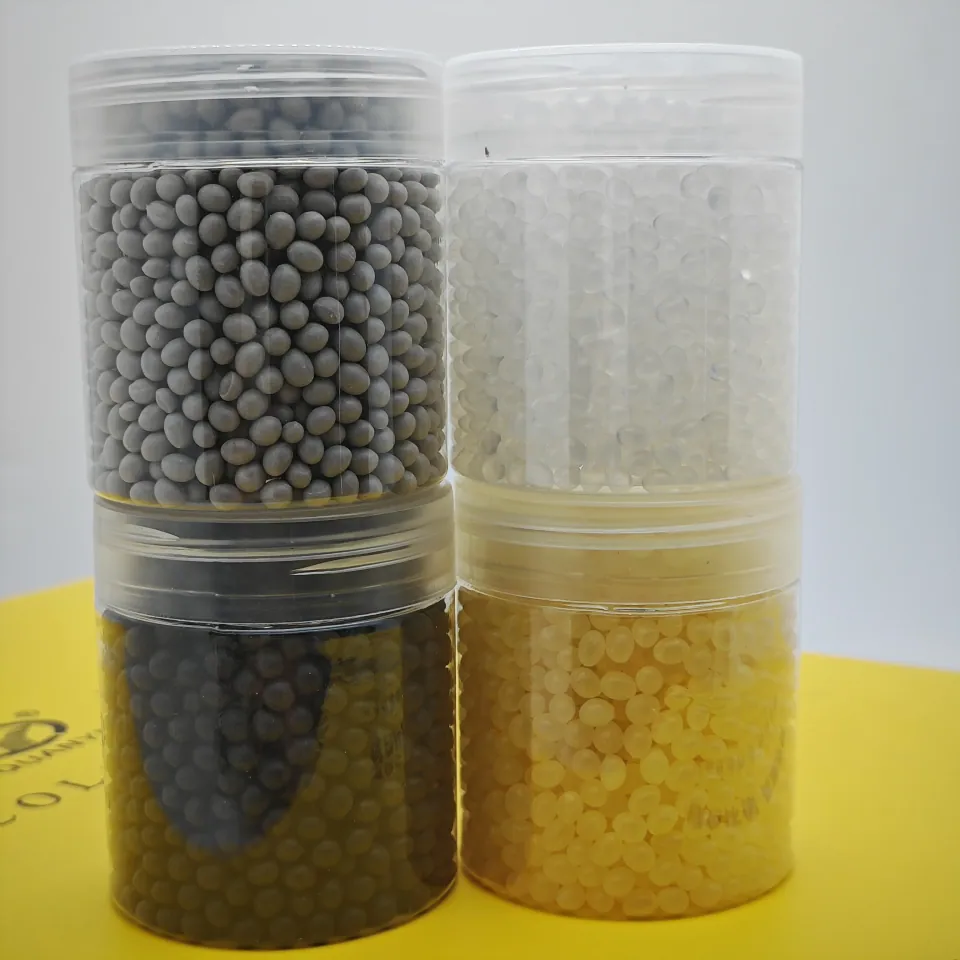
4. Edge Banding Machine Settings: Temperature, Speed and Pressure
The following values are preliminary commissioning references for conventional EVA edge banding—not universal production specifications.
| Parameter | Medium-temperature EVA | High-temperature EVA |
|---|---|---|
| Reference temperature range | 150–180°C | 180–210°C |
| Typical machine speed | 10–30 m/min | 15–40 m/min |
| Pressure roller pressure | 3–5 kg/cm² | 3–5 kg/cm² |
| Open time | Product-specific | Product-specific |
| Adhesive application | Match panel and edge material | Match panel and edge material |
| Substrate condition | Clean and dry | Clean and dry |
Product-grade note: These 150-180 C and 180-210 C ranges describe our EVA product grades. Other manufacturers’ ranges differ; always follow the selected adhesive’s technical data sheet. See our EVA hot melt adhesive grades.
Temperature reference: Confirm whether a specification applies to the glue tank or application roller. Do not automatically use the same setting for both.
How the parameters work together
- Adhesive temperature: Too low may prevent proper wetting; too high may degrade the adhesive or make it excessively fluid.
- Machine speed: Higher speed leaves less time for application, positioning, and pressure bonding. Confirm the adhesive’s open time and application conditions before increasing speed.
- Pressure roller pressure: Too little pressure can prevent full contact. Too much pressure may squeeze excessive adhesive from the bond line. Adjust for the machine, roller setup, and material thickness.
- Open time: This depends on formulation, temperature, coating weight, substrate temperature, edge material, speed, and workshop conditions. There is no single value for every EVA adhesive.
- Preheating: Cold panels can cool the adhesive quickly. Monitor the panel surface temperature and follow the adhesive maker’s processing guidance rather than relying on a fixed preheating time.
A practical adjustment sequence
- Check the adhesive manufacturer’s recommended temperature range.
- Confirm glue tank and roller temperatures separately.
- Check panel moisture content and surface condition.
- Start at a conservative production speed.
- Adjust adhesive application and pressure roller settings.
- Increase speed gradually.
- Test bond strength and appearance.
- Record the final settings for repeat production.
Change one parameter at a time so that the effect of each adjustment can be evaluated.
5. Adjusting EVA Glue Temperature for Different Substrates
Substrate structure and surface condition affect wetting, glue consumption, and bond quality. Confirm final settings with production trials using the actual panel and edge banding.
MDF
MDF has a relatively uniform structure. Keep the panel edge clean and free of machining dust; check whether it is porous or rough, and ensure the pressure rollers make adequate contact. A highly absorbent edge may draw adhesive away from the bonding interface.
Particleboard
Particleboard edges may expose wood particles and be more porous than a well-machined MDF edge. Remove loose particles and dust, check edge uniformity, apply enough adhesive, and verify full contact. Raising temperature alone will not compensate for an uneven or poorly prepared edge.
Plywood and multilayer board
Surface structure varies with the wood species, adhesive system, and manufacturing process. Check smoothness, machining quality, and contamination, then test the actual material and edge banding together.
Solid wood
Moisture content and dimensional movement can vary. Control moisture, keep the bonding surface flat and clean, avoid bonding excessively cold or damp material, and select an adhesive designed for the application.
6. Five Common Edge Banding Problems Caused by Incorrect Settings
Excessive glue squeeze-out
Possible causes: Too much adhesive, glue that is too fluid, excessive roller pressure, or incorrect roller adjustment.
What to check: Actual adhesive temperature, application quantity, roller pressure, and roller alignment.
Stringing or glue threads
Possible causes: Temperature outside the recommended range, unsuitable viscosity or formulation, or a contaminated glue roller.
What to check: Actual application temperature, adhesive-machine compatibility, and machine cleanliness. Stringing is not always caused by excessive heat.
Peeling or weak adhesion
Possible causes: Low adhesive temperature, insufficient application, excessive feed speed, cold or damp substrates, poor surface preparation, or inadequate pressure.
What to check: Actual temperature, glue quantity, speed, surface condition, pressure, and material compatibility.
Discoloration or burnt adhesive
Possible causes: Excessive temperature, long heating or residence time, or contamination in the glue system.
What to check: Temperature against the product specification, heating during production breaks, and cleaning according to the equipment and adhesive instructions.
Thick or uneven glue lines
Possible causes: Incorrect roller gap or alignment, uneven adhesive transfer, unsuitable viscosity, inconsistent pressure, or irregular panel edges.
What to check: Roller setup, glue distribution, application quantity, edge machining, and adhesive temperature. A clean glue line depends on both adhesive performance and mechanical accuracy.
7. Workshop Temperature and Humidity
Cold panels can remove heat from the adhesive layer quickly, shortening effective open time and reducing the opportunity for wetting. Store panels indoors where appropriate, avoid feeding excessively cold material directly into production, and check panel surface temperature and glue roller temperature.
High humidity can affect the moisture content of wood-based panels. Ensure that panels are not damp and that their moisture content is suitable for the adhesive and substrate.
Do not automatically raise glue temperature in cold weather. Check workshop and panel temperature, panel moisture, actual roller temperature, production speed, and adhesive quantity first. Adjust only the parameters that the measurements and production trials show need correction.
8. What About PUR Hot Melt Glue Temperature?
PUR differs from conventional EVA. EVA forms a thermoplastic bond as it cools and solidifies; PUR also reacts with moisture to form a crosslinked structure.
Some industrial PUR edge banding adhesives specify processing temperatures around 130–150°C, but the correct value depends entirely on the formulation and equipment. PUR requires moisture-protected packaging and suitable application equipment.
| Feature | EVA hot melt | PUR hot melt |
|---|---|---|
| Bonding mechanism | Cooling and solidification | Cooling followed by moisture curing |
| Processing temperature | Formulation-dependent, often higher | Formulation-dependent, sometimes lower |
| Heat and moisture resistance | Depends on formulation | Generally higher after proper curing |
| Equipment and cleaning | EVA-compatible system and procedure | PUR-compatible equipment and PUR-specific procedure |
Do not run PUR using ordinary EVA settings without checking equipment compatibility and the manufacturer’s instructions. Before switching, evaluate equipment, cleaning, production volume, and end-product requirements.
9. Choosing the Right Edge Banding Hot Melt Adhesive
Temperature is only one part of adhesive selection. Review the following before purchasing:
| Selection factor | What to check |
|---|---|
| Edge banding material | PVC, ABS, PP, veneer, or melamine |
| Panel material | MDF, particleboard, plywood, or solid wood |
| Edge thickness | Thin, standard, or thick banding |
| Machine speed | Actual production speed in m/min |
| Application temperature | Glue tank and roller temperatures |
| Viscosity and application | Machine compatibility and coating requirements |
| Open time | Compatibility with production speed |
| Bonding performance | Initial adhesion and final bond strength |
| Operating environment | Workshop and material temperature |
A suitable adhesive should provide stable processing, consistent application, reliable bonding, and an acceptable production cost. Test samples under actual production conditions, especially before placing a bulk order.
10. Frequently Asked Questions
What is the ideal hot melt glue temperature for edge banding?
There is no universal setting. Many EVA edge banding adhesives operate at approximately 150–210°C, depending on formulation and application. Follow the manufacturer’s specifications and confirm whether they refer to the tank or roller.
Is 180°C suitable for EVA edge banding glue?
180°C is a common reference for many EVA formulations, but some require lower or higher settings. Check the technical data sheet and measure the actual application temperature.
What is the difference between 150°C and 210°C hot melt glue?
The difference is not simply bonding strength. Formulations are designed to achieve suitable viscosity, wetting, and processing stability at different temperatures. The right choice depends on the machine, substrate, edge material, and production conditions.
What is the recommended roller speed for edge banding?
Many industrial lines operate at approximately 10–40 m/min, but the suitable speed depends on adhesive open time, application quantity, machine configuration, and bonding requirements.
What pressure should pressure rollers use?
Some EVA adhesive data sheets specify approximately 3–5 kg/cm². This is a reference, not a universal setting; follow the machine and adhesive specifications.
Why does edge banding peel even when the glue temperature is correct?
Temperature alone cannot guarantee a strong bond. Insufficient glue, contaminated surfaces, incorrect pressure, excessive speed, unsuitable formulation, or poor material compatibility can also cause peeling.
Can I use the same EVA glue settings in summer and winter?
Not necessarily. Seasonal changes affect panel temperature, adhesive cooling, and effective open time. Check material conditions and production results before changing settings; adjust temperature only when measurements and trials support it.
Conclusion: Correct Temperature Means Better Edge Banding Quality
The right hot melt glue temperature is essential for consistent edge banding, but it should not be considered independently of other machine parameters. Whether you choose medium-temperature EVA at 150–180°C or high-temperature EVA at 180–210°C, match the formulation to your machine, production speed, edge banding material, and substrate.
A reliable adhesive supplier should provide technical specifications, recommended processing conditions, and support during production testing.
Wuhan Quanyixintong New Materials Co., Ltd. manufactures and supplies EVA and PUR hot melt adhesives for furniture manufacturers and edge banding factories. Our team can help evaluate adhesive viscosity, application temperature, suitable formulations, sample testing, production parameters, OEM packaging, and bulk supply.
Request a quote or glue samples and share your machine specifications, production speed, and bonding requirements.
