Choosing the right edge banding thickness and width is essential for producing durable, attractive, and cost-effective furniture. The wrong specification can lead to exposed panel cores, weak edge protection, difficult trimming, or unnecessary material costs.
For details relevant to this topic, review thick edge banding specifications and send a sample request.
Whether you manufacture kitchen cabinets, wardrobe doors, office furniture, retail fixtures, or decorative wall panels, understanding the difference between edge banding thickness and width helps you select the right material for every application.
Edge banding is available in different thicknesses, commonly ranging from 0.4mm to 2mm for standard furniture applications, with thicker options available for specialized projects. Width selection is even more flexible, ranging from narrow 15mm strips to wide custom materials of 600mm.
In this guide, we explain how to choose edge banding thickness, calculate the correct width, compare different materials, and specify custom dimensions for your furniture production.
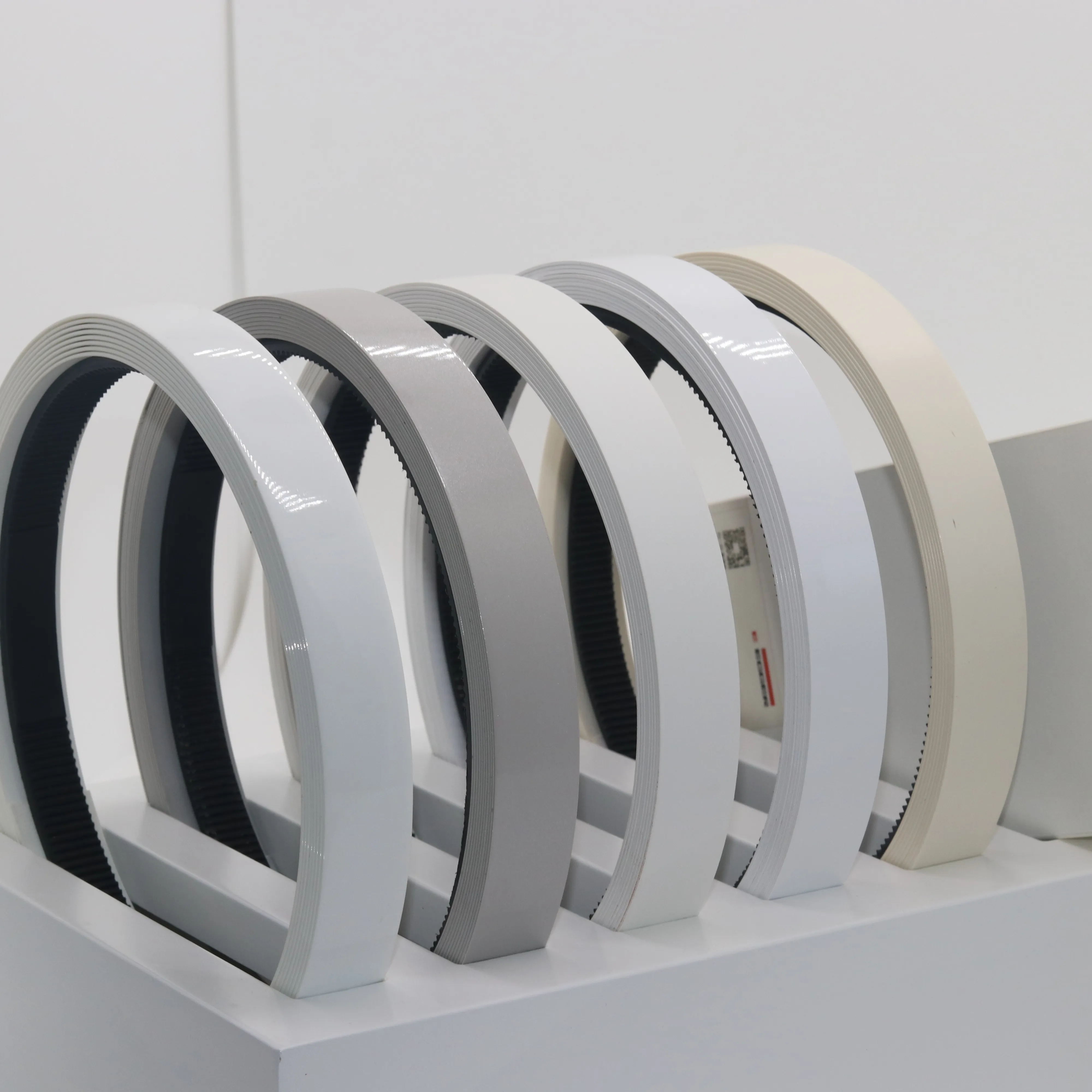
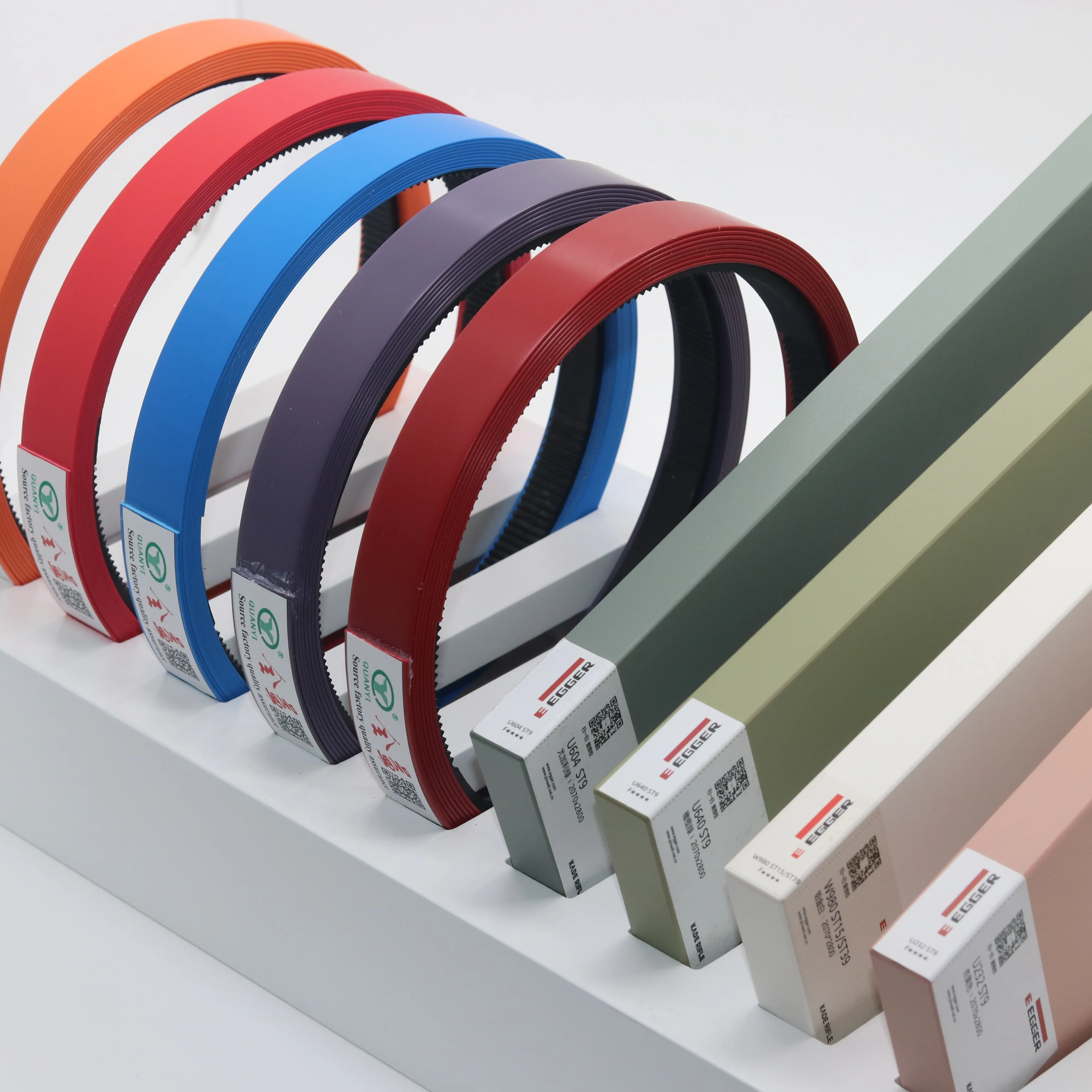
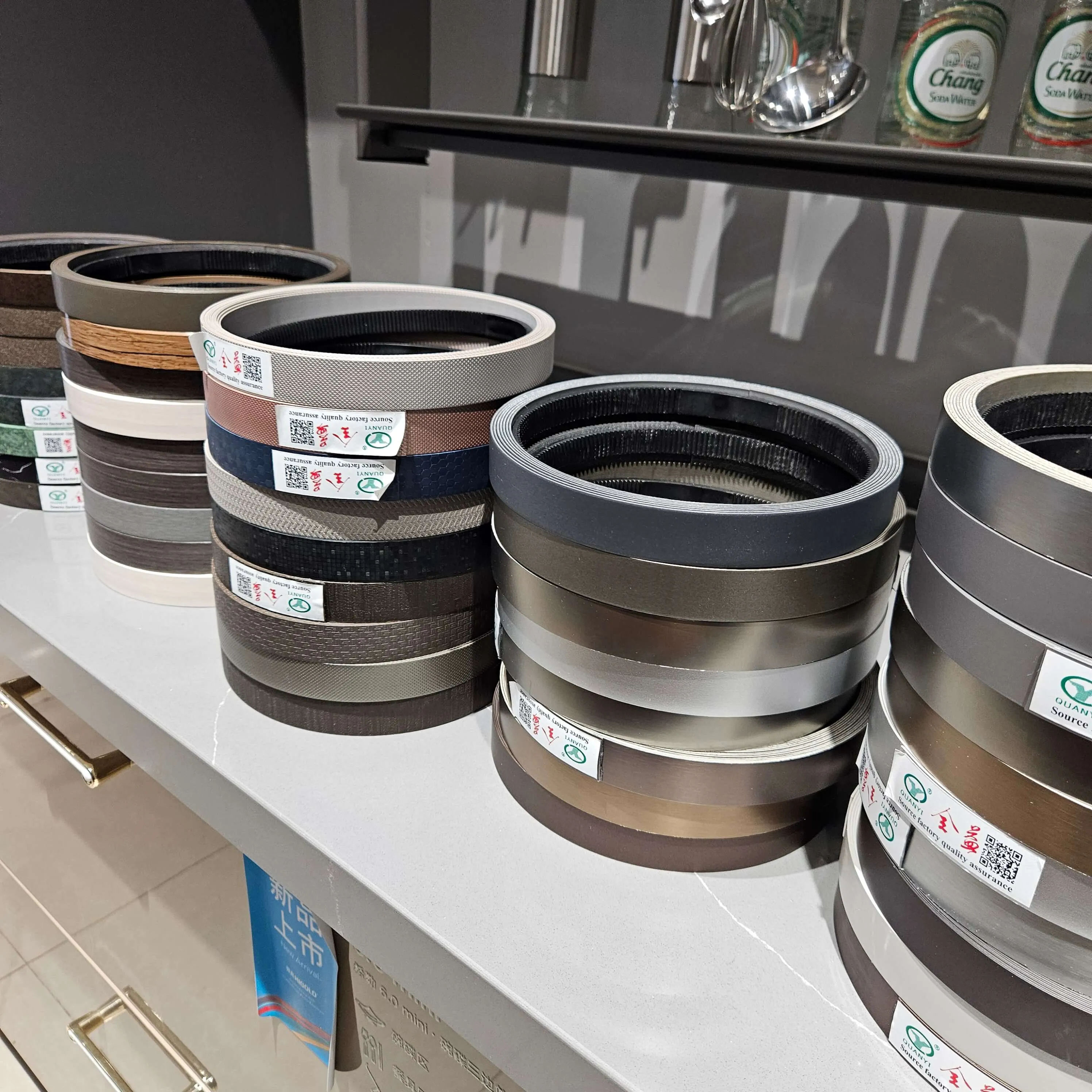
1. Edge Banding Thickness vs. Width: What’s the Difference?
Before selecting a specification, it is important to understand two basic measurements.
- Thickness (mm): The distance from the front surface to the back surface of the edge banding. It determines the finished edge appearance, impact protection, and processing requirements.
- Width (mm): The measurement across the edge banding strip. It determines which panel thickness or decorative surface the material can cover.
For example, 0.8mm × 22mm PVC edge banding means the material is 0.8mm thick and 22mm wide.
Here is a practical overview of common specifications:
| Thickness | Typical Applications | Main Advantage |
|---|---|---|
| 0.4mm | Hidden cabinet edges, economical furniture | Low material cost |
| 0.6mm | Interior furniture panels | Flexible and economical |
| 0.8mm | Standard cabinet components | Balanced cost and protection |
| 1.0mm | Cabinet doors, wardrobes, office furniture | Better edge protection |
| 1.5mm | Higher-use furniture components | Greater impact resistance |
| 2.0mm | Premium cabinets, doors, commercial furniture | Strong, substantial edge appearance |
| 3.0mm | Specialized heavy-duty applications | Thick, durable edge profile |
These are general industry reference points. Actual availability depends on the material, manufacturing process, and edge banding machine.
Important: A thicker edge band does not automatically mean better performance. The right specification depends on the furniture application, expected impact, bending requirements, and production equipment.
2. Thin Edge Banding: 0.4mm–1.0mm
Thin edge banding is widely used in mass-produced furniture where cost efficiency, flexibility, and a relatively slim appearance are important.
0.4mm Edge Banding
0.4mm edge banding is an economical solution for furniture components that receive limited physical impact.
Typical applications include:
- Hidden edges inside cabinet carcasses
- Wardrobe interior panels
- Back panels and low-contact components
- Budget flat-pack furniture
- Furniture parts where cost control is a priority
Its main advantages are low material consumption and relatively easy processing.
However, 0.4mm material offers less impact protection than thicker alternatives. It is generally not the first choice for frequently handled cabinet doors, exposed shelves, or commercial furniture.
0.6mm–0.8mm Edge Banding
The 0.6mm and 0.8mm ranges provide a practical balance between cost and finished appearance.
Common applications include:
- Wardrobe panels
- Cabinet interior components
- Bookshelves
- Drawer components
- Standard residential furniture
For manufacturers producing large quantities of panel furniture, these thicknesses can help control material costs while maintaining a clean and consistent finished edge.
1.0mm Edge Banding
1mm edge banding offers more substantial edge coverage and protection than thinner options.
It is suitable for:
- Kitchen cabinet components
- Wardrobe doors
- Drawer fronts
- Office furniture
- Shelving systems
- General-purpose residential furniture
For many furniture manufacturers, 1mm is a practical middle-ground specification between economical thin edging and premium 2mm edging.
3. 1mm vs. 2mm Edge Banding: Which Should You Choose?
This is one of the most common questions from furniture manufacturers and purchasing managers.
Both specifications are widely used, but they serve different production requirements.
| Comparison | 1mm Edge Banding | 2mm Edge Banding |
|---|---|---|
| Edge appearance | Slim and relatively subtle | More substantial and prominent |
| Impact protection | Good for general furniture | Better for higher-impact applications |
| Material consumption | Lower | Higher |
| Processing | Generally easier | Requires suitable trimming and finishing settings |
| Typical furniture | Wardrobes, cabinets, shelves | Premium doors, desks, commercial furniture |
| Cost | More economical | Higher material cost |
When Should You Use 1mm?
Choose 1mm edge banding when:
- You manufacture standard residential cabinets.
- Your furniture components receive normal daily use.
- You need a balance between appearance and material cost.
- Your production line is optimized for standard edge banding.
When Should You Use 2mm?
Choose 2mm edge banding when:
- Cabinet doors have frequently exposed edges.
- Furniture is used in commercial environments.
- Desks and shelves are exposed to regular impacts.
- You want a thicker, more premium-looking edge.
- Your machining equipment supports thicker edge materials.
Is 2mm Edge Banding Always Better?
No.
A 2mm edge banding specification can increase material consumption and processing requirements. If a furniture component has limited exposure to impacts, 1mm may already provide sufficient performance.
The best approach is to use different thicknesses for different furniture components rather than applying one specification to every edge.
4. Thick Edge Banding: 2mm–3mm and Specialized Profiles
Thicker edge banding is designed for applications where edge appearance, impact protection, and finishing requirements are more demanding.
2mm Edge Banding
2mm is a popular specification for premium furniture manufacturing.
Typical applications include:
- High-end kitchen cabinet doors
- Wardrobe door edges
- Office desks and workstations
- Commercial shelving
- Hotel furniture
- Retail display furniture
Its greater thickness provides additional material for edge finishing and allows more substantial corner profiles when the machine and tooling are suitable.
3mm Edge Banding
3mm edge banding is used in selected heavy-duty and specialized furniture projects.
Potential applications include:
- Thick worktops
- Heavy-use commercial furniture
- Special architectural furniture components
- Decorative furniture profiles
- Projects requiring a prominent edge appearance
However, 3mm edging is not suitable for every standard edge banding machine. Trimming capacity, cutter geometry, feed speed, adhesive compatibility, and corner finishing must all be checked before production.
What About 10mm–60mm Edge Banding?
There is an important distinction here: dimensions between 10mm and 60mm may refer to the width of a decorative strip or custom edge-covering material, not its thickness.
Wide materials can be used for:
- Decorative cabinet door surfaces
- Furniture side panels
- Decorative strips and accent details
- Curved furniture components
- Special-shaped furniture profiles
- Customized interior decoration
For example, a 50mm-wide decorative strip may cover a much larger visible area than conventional 22mm edge banding.
These products require application-specific specifications. The material thickness, flexibility, surface finish, and bonding method should be selected according to the actual design.
5. How to Calculate Edge Banding Width
Choosing the correct edge banding width is just as important as choosing its thickness.
The basic principle is simple:
Edge banding width = Panel thickness + Trimming allowance
For standard automatic edge banding production, an additional 3–4mm is a practical starting point for trimming, although the actual allowance depends on machine settings.
Edge Banding Width Calculation Examples
| Panel Thickness | Suggested Edge Banding Width | Application |
|---|---|---|
| 12mm | 14–15mm | Thin furniture panels |
| 15mm | 17–18mm | Cabinet components |
| 16mm | 18–19mm | Standard furniture |
| 18mm | 21–22mm | Common cabinet panels |
| 22mm | 24–25mm | Thicker furniture panels |
| 25mm | 27–28mm | Thick cabinet doors |
| 30mm | 32–33mm | Specialized furniture |
| 40mm | 42–43mm | Thick decorative panels |
These are indicative ordering dimensions, not universal standards. Confirm the actual width with your edge banding machine and trimming setup.
Example: Selecting Edge Banding for an 18mm Board
Suppose your factory manufactures kitchen cabinet panels with a thickness of 18mm.
You want the finished edge to be flush with both panel surfaces.
The calculation is:
18mm + 3mm trimming allowance = 21mm, or 18mm + 4mm trimming allowance = 22mm depending on the machine and finishing requirements.
For general cabinet production, 21mm is often a practical starting point. If your machine requires more trimming room, 22mm is a better choice.
A common purchasing mistake: Ordering edge banding at exactly the same width as the panel thickness. This can leave insufficient material for trimming and may expose the raw panel edge.
6. Custom Edge Banding Width: 15mm–600mm
Standard edge banding widths are commonly used for conventional panel furniture. However, some furniture designs require wider materials.
Custom-width edge banding allows manufacturers to work with different panel dimensions, decorative designs, and special applications.
Depending on material and production requirements, custom widths can range from approximately 15mm to 600mm.
Narrow Widths: 15mm–30mm
These widths are commonly associated with standard furniture panel edging.
Applications include:
- 16mm and 18mm cabinet boards
- 22mm wardrobe panels
- Drawer sides
- Bookshelves
- Kitchen cabinet components
Common specifications include 0.8mm × 22mm and 1mm × 23mm.
Medium Widths: 30mm–100mm
Medium-width materials are suitable for thicker panels and larger decorative surfaces.
Applications include:
- Thick cabinet doors
- Furniture side panels
- Decorative door edges
- Custom furniture components
- Special furniture profiles
Wide Materials: 100mm–600mm
Wide-format materials are designed for more specialized manufacturing requirements.
Potential applications include:
- Large decorative furniture surfaces
- Cabinet door covering materials
- Interior decorative panels
- Furniture accent strips
- Customized curved or shaped components
For these applications, the material specification should be confirmed against the actual product drawing or physical sample.
At Quanyi, we support customized PVC edge banding dimensions, including different widths, thicknesses, colors, surface textures, and packaging requirements.
For non-standard widths, please provide a drawing or sample so that we can evaluate the appropriate production solution.
7. How to Choose Thickness for Different Furniture Applications
Instead of selecting one thickness for an entire furniture project, consider the actual working conditions of each component.
| Furniture Application | Suggested Starting Thickness | Main Consideration |
|---|---|---|
| Wardrobe interior panels | 0.4–0.8mm | Cost efficiency |
| Cabinet carcasses | 0.8–1.0mm | General protection |
| Kitchen cabinet doors | 1.0–2.0mm | Daily handling |
| Drawer fronts | 1.0–2.0mm | Appearance and impact |
| Bookshelves | 0.8–2.0mm | Edge exposure |
| Office desks | 1.5–2.0mm | Frequent contact |
| Commercial furniture | 1.5–2.0mm | Higher usage intensity |
| Thick worktops | 2.0–3.0mm | Impact and finishing requirements |
| Decorative panels | Application-dependent | Design and surface coverage |
These recommendations are starting points. The final selection should also consider substrate quality, edge geometry, adhesive, environmental conditions, and machine compatibility.
8. PVC vs. ABS vs. PP vs. Acrylic: Which Material Supports Your Requirements?
Thickness and width are only two parts of the specification. Material selection also affects processing performance, appearance, flexibility, and end-use suitability.
PVC Edge Banding
PVC is one of the most widely used materials in furniture edge banding.
Key advantages:
- Good balance of cost and performance
- Wide selection of colors and patterns
- Available in matte, semi-gloss, high-gloss, and embossed finishes
- Suitable for mass-produced furniture
- Flexible customization of dimensions
PVC edge banding is commonly used in 0.4mm–2mm thicknesses for cabinet doors, wardrobes, shelves, and general furniture applications.
It is a practical choice for furniture manufacturers looking for consistent production quality and competitive purchasing costs.
ABS Edge Banding
ABS is a chlorine-free thermoplastic material commonly selected for furniture projects with specific material and environmental requirements.
Key characteristics:
- Good impact resistance
- Suitable for modern furniture designs
- Available in multiple colors and finishes
- Good processing performance when matched with suitable equipment
ABS is commonly available in approximately 0.8mm–2mm specifications, although other dimensions depend on the product range.
It is particularly relevant to furniture manufacturers serving markets where material specifications and environmental requirements are important.
PP Edge Banding
PP (Polypropylene) is another thermoplastic option for furniture edge finishing.
Its characteristics include:
- Low material density
- Good chemical resistance
- Moisture resistance
- Flexibility in product design
PP edge banding can be considered for different furniture applications, especially when buyers have specific material requirements.
The suitable thickness depends on the product design, stiffness requirements, bonding system, and machine compatibility.
Acrylic Edge Banding
Acrylic edge banding is widely associated with modern high-gloss furniture and premium decorative designs.
Its main advantages include:
- High-gloss surface appearance
- Attractive visual depth
- Smooth decorative finish
- Suitability for premium cabinet and furniture fronts
Acrylic materials are commonly selected for high-gloss kitchen cabinets, wardrobes, display furniture, and decorative panels.
The appropriate thickness and backing construction should be evaluated according to the specific acrylic product and bonding process.
Material Comparison
| Material | Main Advantage | Common Applications |
|---|---|---|
| PVC | Cost-performance balance and design flexibility | General furniture |
| ABS | Chlorine-free material option | Modern and export furniture |
| PP | Low density and chemical resistance | Specialized furniture |
| Acrylic | High-gloss decorative appearance | Premium cabinet fronts |
The best material is not necessarily the most expensive one. It should match your furniture design, processing equipment, market requirements, and target product positioning.
9. What Should You Confirm Before Ordering Custom Edge Banding?
Before placing a bulk order, furniture manufacturers and distributors should confirm the following specifications:
- Material: PVC, ABS, PP, or Acrylic.
- Thickness: 0.4mm, 0.6mm, 0.8mm, 1mm, 1.5mm, 2mm, or a customized specification.
- Width: Standard or customized dimensions according to panel thickness.
- Color: Solid colors, wood grain, or custom color matching.
- Surface finish: Matte, semi-gloss, high-gloss, embossed, or other textures.
- Roll length: According to production requirements.
- Packaging: Standard rolls, customized labels, or private-label packaging.
- Processing compatibility: Edge banding machine, adhesive type, trimming, and finishing requirements.
For large-volume orders, we recommend confirming the specifications with physical samples before starting mass production.
This helps reduce the risk of color differences, dimensional inconsistencies, and processing problems.
10. Custom Edge Banding Manufacturer: From Standard Sizes to Special Dimensions
Finding a supplier that can provide consistent dimensions, colors, and surface finishes is important for furniture factories and distributors.
At Wuhan Quanyixintong New Materials Co., Ltd. (Quanyi), we manufacture and supply PVC edge banding and other furniture edge finishing solutions for a wide range of projects.
Our production capabilities include:
- PVC, ABS, PP, and Acrylic edge banding options
- Common thicknesses from 0.4mm to 2mm for our standard PVC range
- Customized widths from 18mm to 600mm, subject to material and product requirements
- Solid colors, wood grain, matte, semi-gloss, and high-gloss finishes
- Customized colors based on physical samples or color references
- Customized roll lengths and packaging
- OEM and private-label services
With 30 extrusion lines and edge banding capacity of up to 1.5 million meters per day, we support standard and customized furniture manufacturing requirements.
Whether you need economical 0.4mm PVC edge banding for mass production or wider decorative materials for specialized furniture projects, our team can help evaluate the appropriate specifications.
Need help selecting the right thickness and width?
Send us your panel thickness, application, preferred material, and required dimensions. We can recommend a suitable specification and arrange samples for evaluation.
Request Free Samples and a Quotation
Frequently Asked Questions
1. What is the most common edge banding thickness?
0.8mm, 1mm, and 2mm are widely used thickness options in furniture manufacturing. The appropriate choice depends on the furniture application, impact requirements, appearance, and production budget.
2. Is 1mm or 2mm edge banding better for kitchen cabinets?
Both can be suitable. 1mm is a practical choice for general cabinet components, while 2mm is often preferred for exposed cabinet doors and edges that experience more frequent impacts.
3. What width of edge banding should I use for an 18mm board?
A width of approximately 21–22mm is a common starting point. This provides an additional 3–4mm for trimming and finishing.
4. Can I use 2mm edge banding on 18mm MDF?
Yes. 2mm edge banding can be used on 18mm MDF if the edge banding machine, adhesive system, and trimming tools are compatible with the material.
5. Is 3mm edge banding available?
Yes, 3mm edge banding is available in specialized product ranges. However, it requires suitable processing equipment and should be evaluated according to the application.
6. What is 15mm edge banding used for?
15mm edge banding is suitable for certain narrow furniture panels and decorative components. The actual selection depends on the panel thickness and required trimming allowance.
7. Can edge banding be customized to 50mm or 100mm wide?
Yes. Wider edge banding and decorative materials can be produced for special furniture applications, depending on material and production requirements.
8. Which is better: PVC or ABS edge banding?
PVC is often selected for its cost-performance balance and broad design options. ABS is a chlorine-free alternative with different material characteristics. The choice depends on the customer’s application, market requirements, and processing conditions.
9. Can I order edge banding that matches EGGER or other decorative board colors?
Yes. Color matching can be evaluated using a board sample, physical edge banding sample, or a specific decorative color reference. A physical sample is recommended for final approval.
10. Can I order customized edge banding directly from a manufacturer?
Yes. A direct manufacturer can support customized dimensions, colors, textures, roll lengths, and packaging. Before ordering, confirm the technical specifications, sample approval, MOQ, and production lead time.
Looking for a reliable edge banding manufacturer?
Contact Quanyi to discuss your project requirements.
Website: https://edge-band.com/
Product Range: /products/
PVC Edge Banding: /pvc-edge-banding/
Contact Us: /contact/
Quanyi – Your Manufacturing Partner for Customized Furniture Edge Banding.
