If you export edge banding, hot melt adhesives, or panel accessories to GCC countries like Saudi Arabia, the UAE, Qatar, or Kuwait, you have likely encountered a specific type of buyer behavior.
During initial inquiries, they haggle aggressively over unit prices. Yet, as soon as you enter the sampling and technical review phase, their questions turn relentlessly specific:
- “What is the Heat Deflection Temperature (HDT) of your PVC/ABS edge banding?”
- “Will the rolls soften or stick together when stored for three months in 50°C shipping containers or non-air-conditioned warehouses?”
- “What is the peel strength of your primer layer when paired with PUR versus EVA hot melt adhesives under high humidity?”
- “What UV resistance rating (ISO 4892) do your white and light-colored edge bandings achieve to ensure $\Delta E < 1.0$ over time?”
For suppliers accustomed to negotiating strictly on a “price per meter” basis, this barrage of technical interrogations can feel frustrating. However, when you understand the working conditions of Middle Eastern furniture manufacturers and major real estate megaprojects, the reality becomes clear: a Middle Eastern buyer’s obsession with weather resistance and stability is a rational strategy to mitigate liquidated damages and costly post-project claims.
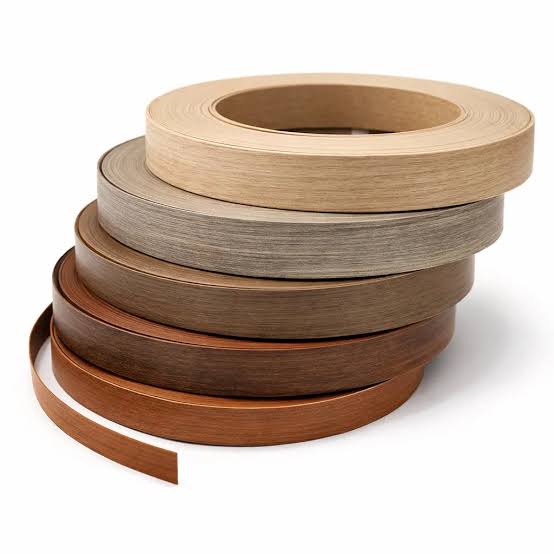
1. The Extreme Climate Test: From Sea Freight Containers to Job Sites
The Gulf Cooperation Council (GCC) region presents one of the harshest industrial environments in the world, placing severe stress on polymers and bonding systems:
- The “Oven Effect” Inside Shipping Containers: Freight containers traveling from Asian ports to Jeddah or Jebel Ali spend weeks exposed to intense sunlight. Interior temperatures near the top of the container frequently exceed 70°C. Low-grade PVC edge banding can suffer from plasticizer migration, roll blocking (fusing together), or primer degradation before even reaching the port.
- High Temperatures and Humidity During Installation: Summer temperatures in Riyadh or Dubai routinely reach 45°C–50°C, accompanied by coastal humidity levels exceeding 90%. Many commercial and residential job sites lack operational air conditioning during the fit-out phase. Edge banding applied under these conditions with insufficient heat resistance will quickly shrink, warp, or debond.
- Severe UV Radiation: The Middle East receives intense, year-round solar radiation. If cost-cutting compromises the masterbatch formulation or UV stabilizers, white, beige, or wood-grain edge bandings installed in showrooms or office towers can turn noticeably yellow within months.
2. Low-Cost Component, High-Stakes Penalty
In the Middle East, bulk procurement of edge banding is driven by main contractors, interior fit-out companies, and large-scale furniture manufacturers executing contracts for luxury hotels, high-end residential towers, and government infrastructure.
From the buyer’s financial perspective:
- Edge banding accounts for barely 1%–2% of the total manufacturing cost of a furniture piece or cabinetry unit.
- However, if the edge banding on thousands of installed cabinet doors suffers from delamination, edge chipping during trimming, or severe yellowing at final inspection, the entire handover will be rejected.
Construction and fit-out contracts across GCC nations enforce strict Liquidated Damages clauses—daily financial penalties for delay. If delaminated edges force a contractor to strip, re-edge, or replace installed millwork, they face not only labor waste and downtime, but tens or hundreds of thousands of dollars in breach-of-contract fines.
When evaluating your product, the buyer is calculating the probability of a catastrophic failure multiplied by the cost of that failure. Because their risk exposure is amplified a hundredfold, extensive due diligence is entirely justified.
3. From Reactive Answers to Proactive Solutions: How to Accelerate Buyer Decisions
To shorten the sales cycle and build lasting trust with Middle Eastern buyers, shift the conversation from price per meter to environmental resilience and quality control.
Strategy 1: Provide a Technical Dossier Tailored to High-Heat Environments
Do not send a generic specification sheet. Proactively supply a comprehensive technical package detailing:
- Heat Deflection Temperature (HDT) & Thermal Stability: Proof that the material maintains dimensional stability during transit and unconditioned storage.
- Accelerated Weathering Test Reports (QUV / ISO 4892): Quantitative commitments showing color fastness and yellowing resistance ($\Delta E < 1.0$).
- Primer Peel Strength Data: Test results confirming strong bonding performance when paired with PUR adhesives under elevated humidity.
Strategy 2: Pre-Clear Regulatory Requirements (SASO / SALEEM / ESMA)
Saudi Arabia enforces strict compliance through the Saber platform, requiring Product and Shipment Certificates of Conformity (PC/SC). Before the buyer asks, present third-party testing reports (e.g., SGS or TÜV) verifying compliance with RoHS, phthalate restrictions, and flame retardancy standards to eliminate customs clearance anxieties.
Strategy 3: Standardize the Mockup Testing Protocol
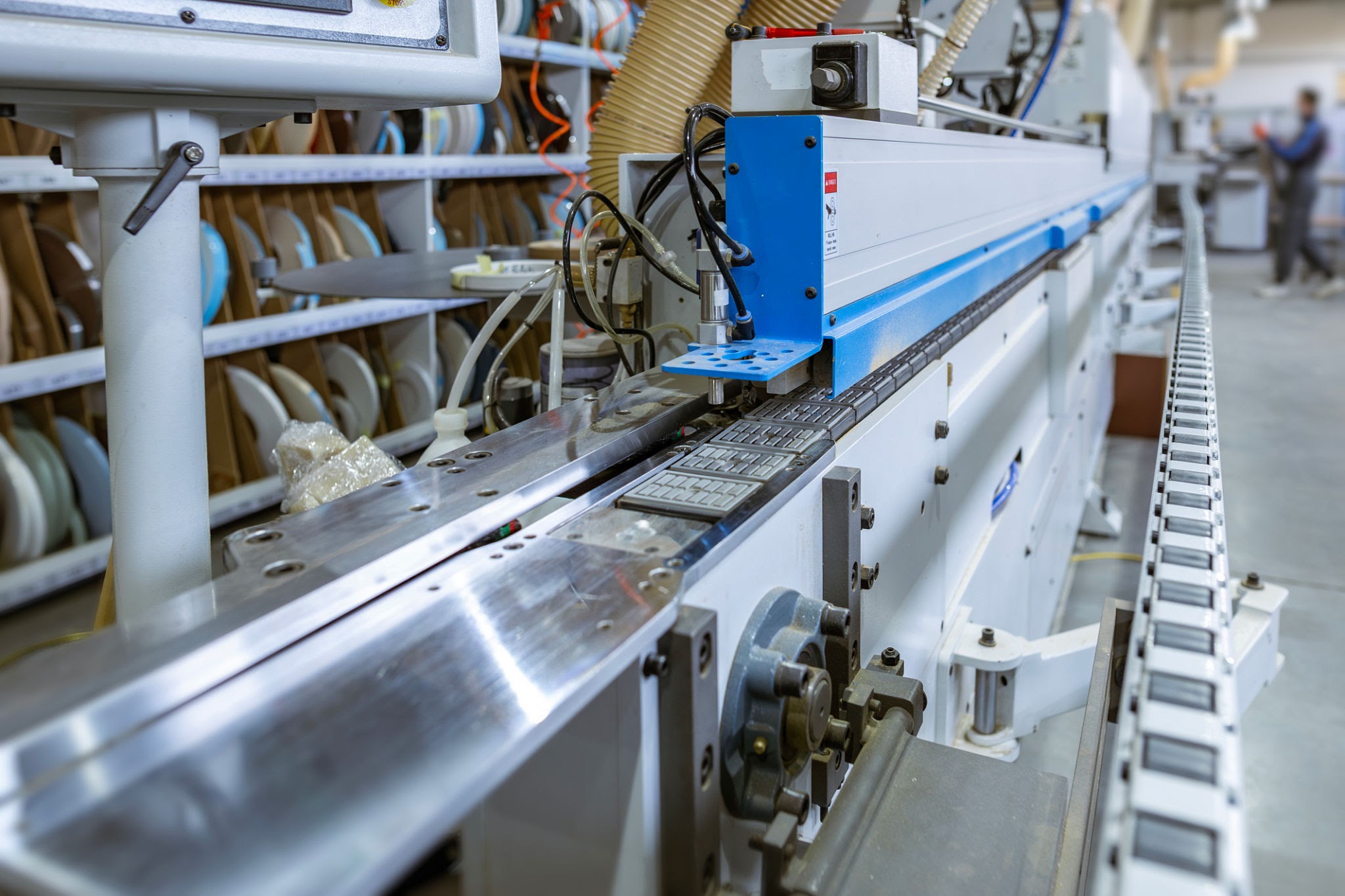
Middle Eastern project procurement almost always requires a Mockup Test (on-site sample installation). Provide a 50–100 meter sample roll accompanied by a clear Machine Parameter Recommendation Card specifying ideal feed speeds, trimming tool RPMs, and adhesive application temperatures. Demonstrating hands-on technical support significantly increases sample approval rates.
Conclusion
Middle Eastern buyers do not move slowly out of indecisiveness, nor do they ask detailed technical questions out of pedantry. They do so because extreme regional climates and heavy contractual liabilities leave no room for error.
When you proactively address their concerns regarding heat resistance, UV color stability, customs compliance, and machinery compatibility, you cease to be just another low-cost overseas supplier. You become a reliable supply chain partner capable of safeguarding their projects.